Przeznaczenie i lokalizacja
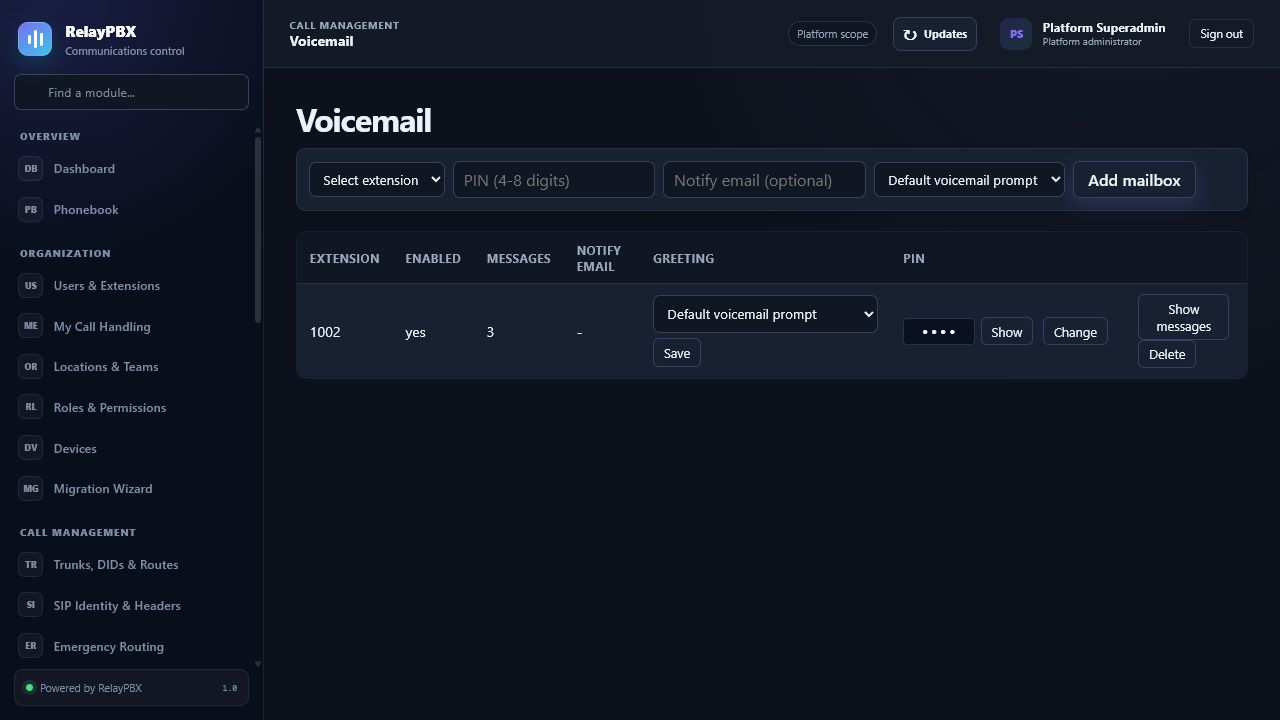
Przypisuj skrzynki, PIN-y, powitania, powiadomienia i retencję wiadomości.
Otwórz Zarządzanie połączeniami → Poczta głosowa. Dostępne elementy sterujące zależą od aktywnej edycji, uprawnień modułu, roli i zakresu tenanta.
Zanim zaczniesz
Przed edycją zapisz obecną ścieżkę źródłową i docelową. Przygotuj zarejestrowany testowy numer wewnętrzny, cel wycofania oraz ekran Rozmowy i raporty do weryfikacji.
Przed zmianą masową albo zmianą routingu zapisz bieżącą wartość lub wyeksportuj objęte nią rekordy. Zapewnia to dokładny punkt porównania i ułatwia ocenę obsługiwanego cofnięcia transakcji.
Proces krok po kroku
Wykonuj kroki po kolei. Nie łącz pierwszej konfiguracji z niezwiązanym porządkowaniem danych; małe i jednoznaczne zmiany łatwiej sprawdzić i wycofać.
- Włącz skrzynkę na numerze wewnętrznym.
- Ustaw i bezpiecznie przekaż PIN.
- Skonfiguruj powitanie i powiadomienie e-mail.
- Zadzwoń na *97 i sprawdź odtwarzanie, zapisywanie oraz usuwanie.
Opis pól
Korzystaj z poniższego opisu podczas wypełniania formularza. Pola ukryte przez edycję, licencję modułu albo rolę są celowo niedostępne dla zalogowanego użytkownika.
- Numer wewnętrzny
- Właściciel skrzynki i tożsamość wykrywana dla *97.
- PIN
- Bieżący kod dostępu do skrzynki, zmieniany przez uprawnionych użytkowników.
- Powitanie
- Domyślny albo nagrany komunikat niedostępności.
- Powiadomienie e-mail
- Opcjonalny odbiorca i polityka załączników.
- Retencja
- Cykl życia i polityka usuwania wiadomości.
Testy akceptacyjne
Zapisanie rekordu jest dopiero początkiem weryfikacji. Wykonaj wszystkie odpowiednie testy poniżej, a przy telefonii zachowaj identyfikator sesji, czas i wynik rozmowy.
- Zadzwoń na *97 z numeru właściciela i sprawdź PIN, liczbę wiadomości i akcje menu.
- Jeżeli włączone, zadzwoń na *98 z innego numeru i sprawdź uwierzytelnienie numerem skrzynki oraz PIN-em.
- Zostaw wiadomość, odtwórz ją ponownie, zapisz albo usuń i sprawdź powiadomienie oraz retencję.
Typowe błędy i bezpieczne odzyskiwanie
Jeżeli test się nie powiedzie, nie dodawaj kolejnych zmian. Przywróć poprzednią wartość albo użyj obsługiwanego cofnięcia transakcji, wygeneruj ponownie konfigurację PBX, a następnie powtórz najmniejszy nieudany test.
- Nie wyświetlaj ani nie zapisuj PIN-ów skrzynek poza uprawnionymi ekranami administracji.
- Numer bez skrzynki musi usłyszeć jednoznaczny komunikat, że poczta nie jest skonfigurowana.
Co dołączyć do zgłoszenia
Podaj tenant, moduł i nazwę obiektu, czas lokalny wraz ze strefą, wynik oczekiwany, wynik obserwowany oraz ostatni poprawny stan. Dla problemu z rozmową dołącz identyfikator logicznej sesji i zanonimizowaną diagnostykę tekstową SIP/SDP przed poproszeniem o PCAP.
Nigdy nie wklejaj do zgłoszenia haseł, kluczy prywatnych, nieprzetworzonego dokumentu licencji ani niezanonimizowanych mediów klienta. Gdy pomoc techniczna potrzebuje dodatkowych danych, użyj jednorazowej zgody diagnostycznej i chronionych załączników.