Przeznaczenie i lokalizacja
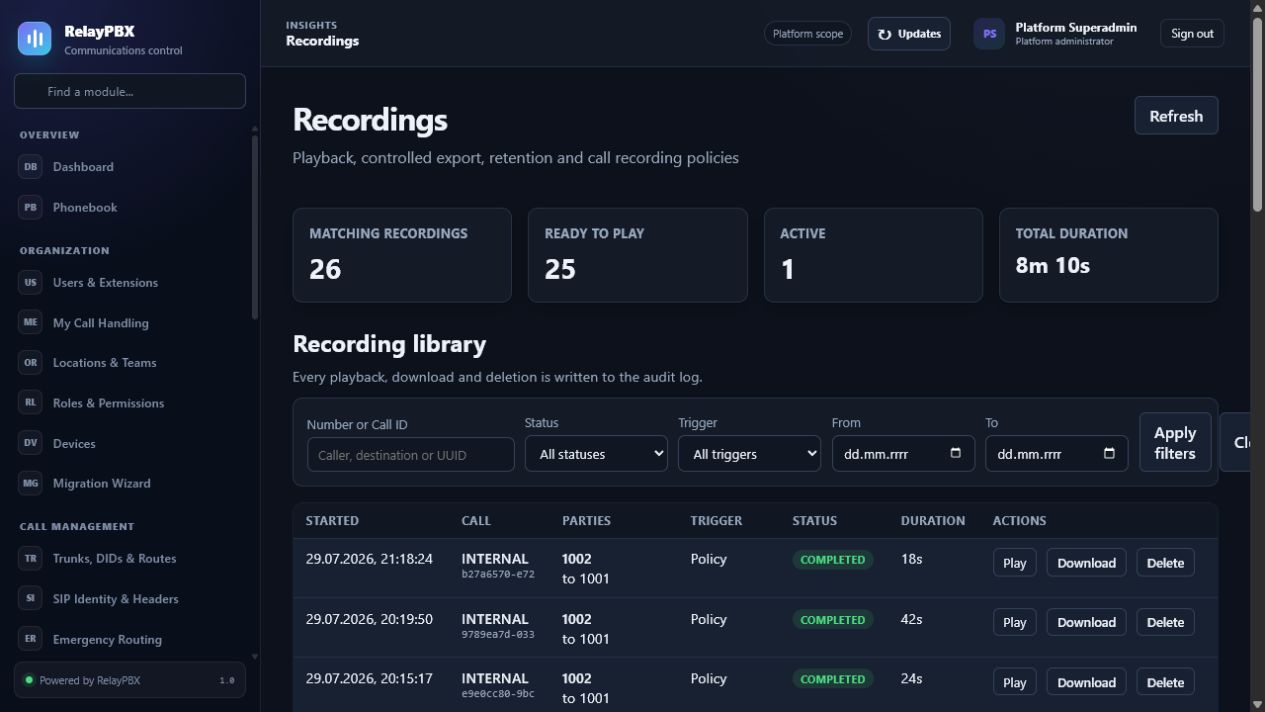
Wyszukuj, odtwarzaj, przechowuj i eksportuj dozwolone nagrania rozmów.
Otwórz Analiza → Nagrania. Dostępne elementy sterujące zależą od aktywnej edycji, uprawnień modułu, roli i zakresu tenanta.
Zanim zaczniesz
Zacznij od najwęższego zakresu tenanta, uczestnika i czasu. Dane rozmów mogą zawierać dane osobowe, dlatego dostęp musi odpowiadać przypisanej roli i polityce retencji.
Przed zmianą masową albo zmianą routingu zapisz bieżącą wartość lub wyeksportuj objęte nią rekordy. Zapewnia to dokładny punkt porównania i ułatwia ocenę obsługiwanego cofnięcia transakcji.
Proces krok po kroku
Wykonuj kroki po kolei. Nie łącz pierwszej konfiguracji z niezwiązanym porządkowaniem danych; małe i jednoznaczne zmiany łatwiej sprawdzić i wycofać.
- Filtruj według rozmowy, uczestnika albo daty.
- Przed odtworzeniem sprawdź zgodę i politykę.
- Dodawaj notatki i tagi bez zmiany materiału źródłowego.
- Eksportuj wyłącznie w autoryzowanym procesie.
Opis pól
Korzystaj z poniższego opisu podczas wypełniania formularza. Pola ukryte przez edycję, licencję modułu albo rolę są celowo niedostępne dla zalogowanego użytkownika.
- Polityka nagrywania
- Reguła nagrywania numeru, grupy, kolejki albo wszystkich rozmów.
- Retencja
- Automatyczny czas usunięcia albo bezterminowe zachowanie.
- Przechowywanie
- Lokalne albo skonfigurowane miejsce zewnętrzne.
- Dostęp
- Rola i zakres kontrolujący odtwarzanie i pobieranie.
Testy akceptacyjne
Zapisanie rekordu jest dopiero początkiem weryfikacji. Wykonaj wszystkie odpowiednie testy poniżej, a przy telefonii zachowaj identyfikator sesji, czas i wynik rozmowy.
- Wykonaj testową rozmowę z wymaganą zgodą i sprawdź powiązanie nagrania z właściwą logiczną rozmową.
- Potwierdź, że nieuprawniony użytkownik nie może odtworzyć ani pobrać pliku.
- Sprawdź retencję i zewnętrzne miejsce na jednorazowym nagraniu.
Typowe błędy i bezpieczne odzyskiwanie
Jeżeli test się nie powiedzie, nie dodawaj kolejnych zmian. Przywróć poprzednią wartość albo użyj obsługiwanego cofnięcia transakcji, wygeneruj ponownie konfigurację PBX, a następnie powtórz najmniejszy nieudany test.
- Prawo dotyczące nagrywania i zgody różni się między jurysdykcjami; uzyskaj zatwierdzenie prawne przed włączeniem.
- Eksport tworzy dodatkową kopię objętą tą samą polityką dostępu i retencji.
Co dołączyć do zgłoszenia
Podaj tenant, moduł i nazwę obiektu, czas lokalny wraz ze strefą, wynik oczekiwany, wynik obserwowany oraz ostatni poprawny stan. Dla problemu z rozmową dołącz identyfikator logicznej sesji i zanonimizowaną diagnostykę tekstową SIP/SDP przed poproszeniem o PCAP.
Nigdy nie wklejaj do zgłoszenia haseł, kluczy prywatnych, nieprzetworzonego dokumentu licencji ani niezanonimizowanych mediów klienta. Gdy pomoc techniczna potrzebuje dodatkowych danych, użyj jednorazowej zgody diagnostycznej i chronionych załączników.