Przeznaczenie i lokalizacja
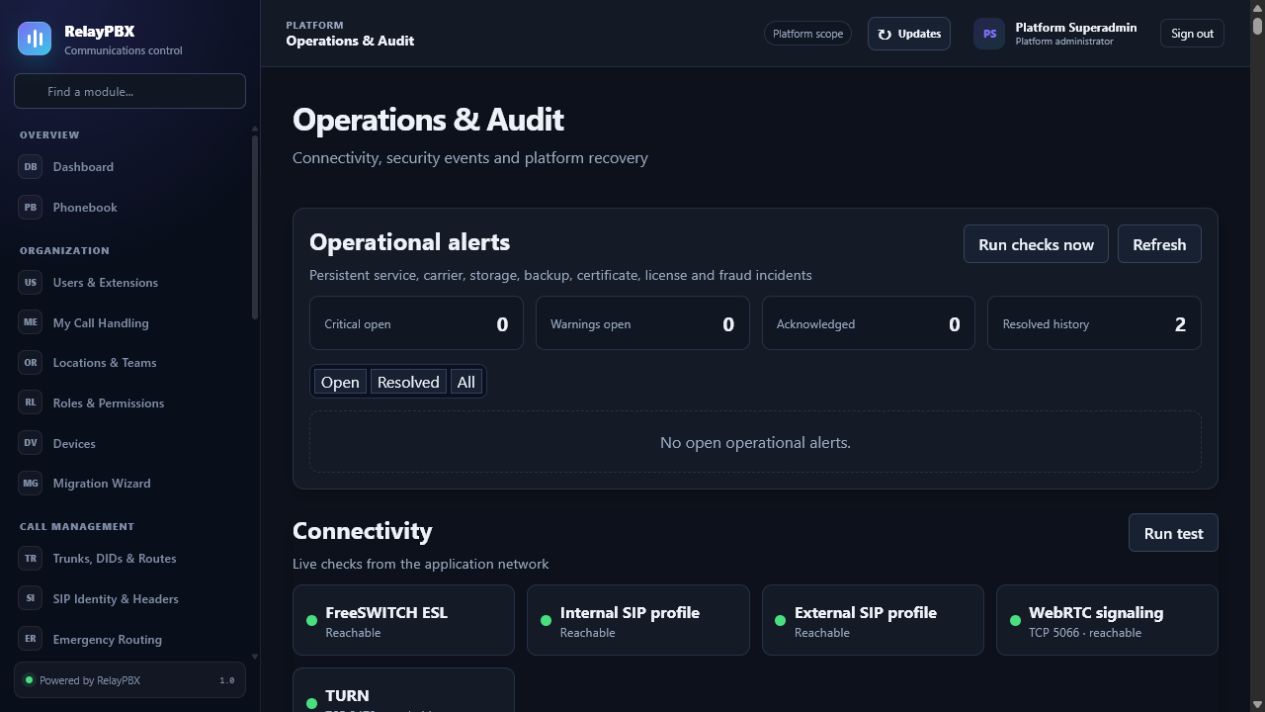
Monitoruj usługi, alerty, działania istotne dla bezpieczeństwa i dane dla pomocy technicznej.
Otwórz Platforma → Operacje i audyt. Dostępne elementy sterujące zależą od aktywnej edycji, uprawnień modułu, roli i zakresu tenanta.
Zanim zaczniesz
Zmiany platformowe mogą wpłynąć na wszystkie tenanty. Potwierdź aktualną zweryfikowaną kopię zapasową, właściciela operacji i okno serwisowe, jeżeli działanie może zrestartować usługi lub zmienić uprawnienia licencji.
Przed zmianą masową albo zmianą routingu zapisz bieżącą wartość lub wyeksportuj objęte nią rekordy. Zapewnia to dokładny punkt porównania i ułatwia ocenę obsługiwanego cofnięcia transakcji.
Proces krok po kroku
Wykonuj kroki po kolei. Nie łącz pierwszej konfiguracji z niezwiązanym porządkowaniem danych; małe i jednoznaczne zmiany łatwiej sprawdzić i wycofać.
- Przejrzyj aktywne alerty według ważności.
- Potwierdzaj alert tylko ze wskazaniem właściciela i notatką.
- Filtruj audyt według aktora, IP i celu.
- W razie potrzeby utwórz zanonimizowany pakiet pomocy.
Opis pól
Korzystaj z poniższego opisu podczas wypełniania formularza. Pola ukryte przez edycję, licencję modułu albo rolę są celowo niedostępne dla zalogowanego użytkownika.
- Stan usług
- Stan bazy, PBX, capture, przestrzeni i usług wspierających.
- Ważność alertu
- Pilność operacyjna i cel eskalacji.
- Rekord audytu
- Aktor, źródłowe IP, akcja, cel i zanonimizowane metadane.
- Pakiet diagnostyczny
- Czasowo ograniczone dane pomocy za zgodą klienta.
Testy akceptacyjne
Zapisanie rekordu jest dopiero początkiem weryfikacji. Wykonaj wszystkie odpowiednie testy poniżej, a przy telefonii zachowaj identyfikator sesji, czas i wynik rozmowy.
- Potwierdź, że każda niesprawna usługa tworzy użyteczny alert.
- Potwierdź alert testowy z właścicielem i notatką, a następnie sprawdź aktora i źródłowe IP w audycie.
- Wygeneruj zanonimizowany pakiet i przejrzyj manifest przed jednorazową zgodą na wysłanie.
Typowe błędy i bezpieczne odzyskiwanie
Jeżeli test się nie powiedzie, nie dodawaj kolejnych zmian. Przywróć poprzednią wartość albo użyj obsługiwanego cofnięcia transakcji, wygeneruj ponownie konfigurację PBX, a następnie powtórz najmniejszy nieudany test.
- Potwierdzenie alertu nie usuwa jego przyczyny.
- Pakiety diagnostyczne i zdalne logi muszą mieć limit czasu, anonimizację i jednoznaczną zgodę klienta.
Co dołączyć do zgłoszenia
Podaj tenant, moduł i nazwę obiektu, czas lokalny wraz ze strefą, wynik oczekiwany, wynik obserwowany oraz ostatni poprawny stan. Dla problemu z rozmową dołącz identyfikator logicznej sesji i zanonimizowaną diagnostykę tekstową SIP/SDP przed poproszeniem o PCAP.
Nigdy nie wklejaj do zgłoszenia haseł, kluczy prywatnych, nieprzetworzonego dokumentu licencji ani niezanonimizowanych mediów klienta. Gdy pomoc techniczna potrzebuje dodatkowych danych, użyj jednorazowej zgody diagnostycznej i chronionych załączników.